
“Read this article in English — Dollar: Birth of an Empire”
Dollar sirf America ka paisa nahi hai.
Socho ek second ke liye:
- Oil aaj bhi largely dollar mein trade hota hai
- Global trade ka bada hissa dollar mein settle hota hai
- Countries apne foreign reserves dollar mein rakhti hain
- Crisis ke time duniya safe assets aur dollar ki taraf bhaagti hai
Ek country ki currency… poori duniya ki currency ban gayi.
Lekin sawal yeh hai:
Yeh hua kaise?
Kya America ne bas notes print kiye aur duniya maan gayi? Kya koi secret deal thi? Kya koi forced kiya gaya?
Nahi.
Dollar ki kahani actually wars, gold, debt, trust aur geopolitical power ki kahani hai.
Aur iski shuruaat hoti hai ek aise America se — jiske paas pehle khud ki proper national currency bhi nahi thi.
Chapter 1 — Jab America Ke Paas Ek Bhi Common Currency Nahi Thi
1700s ka America aaj jaisa superpower nahi tha.
Woh sirf British colonies ka ek collection tha — 13 scattered states, alag-alag laws, alag-alag systems.
Aur sabse badi problem thi — money.
Koi unified national currency nahi thi. Log British pounds, Spanish silver coins, Dutch coins, local colonial notes — aur kabhi kabhi tobacco tak — exchange medium ke taur par use karte the.
Imagine karo: ek growing economy… lekin ek trusted common money nahi.
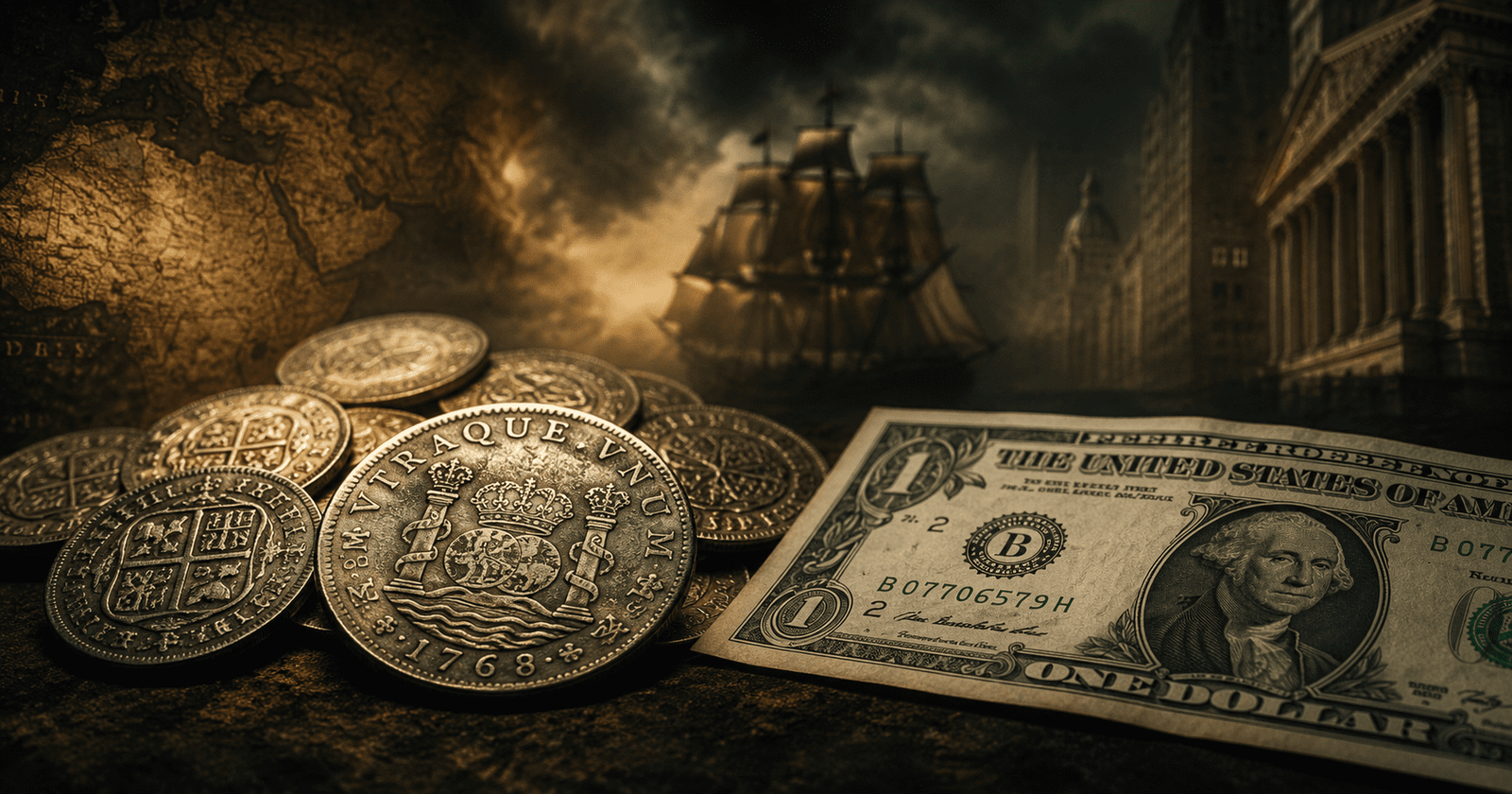
Us waqt duniya mein ek coin bahut famous tha:
Spanish Silver Dollar — “Piece of Eight”(as it was worth 8 Spanish reales)
Yeh coin Latin America aur Mexico ki silver mines se aata tha. Yeh itna widely accepted tha ki yeh technically duniya ki pehli global currency ban chuka tha — 16th century mein hi. (Source: Wikipedia — Spanish Dollar)
Aur “Dollar” naam bhi actually ek German word “Thaler” se aaya hai — jo ek silver coin tha jo Czech Republic ki Joachimsthal mines mein banta tha. Thaler → Dolar → Dollar. (Source: Iberdrola — Spanish Dollar History)
Usi Spanish Dollar ke silver content ke basis par 1792 mein Alexander Hamilton ne American Dollar define kiya — exactly 371.25 grains(24.06 gm) pure silver (Source: Everything Everywhere — History of the Dollar) – trust build karne ke liye.
Tab shayad kisi ne nahi socha hoga — ki future mein wahi naam duniya ki sabse powerful currency ban jayega.
Chapter 2 — Revolution Aur Paison Ka Crisis
American Revolution start hua.
British Empire ke against war cheap nahi thi.
Army ko salary chahiye thi. Weapons chahiye the. Food aur supplies chahiye the.
Lekin America ke paas:
- Strong tax system nahi tha
- Gold reserves nahi the
- Central bank bhi nahi thi
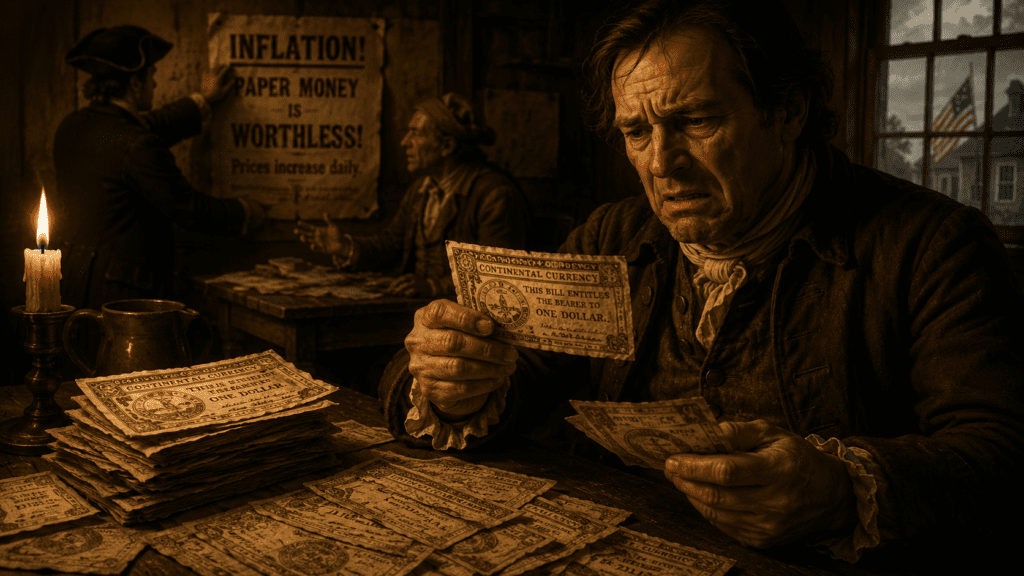
Toh Continental Congress ne ek risky decision liya — paper money print karna.
Is currency ka naam rakha gaya: “Continental Currency.”
Initially logon ne accept kiya.
Lekin problem simple thi:
Currency ki value sirf paper se nahi aata. Value trust se aata hai.
Aur us waqt America ke paas na stable government thi, na strong economy, na koi proper monetary backing.
Result? Massive inflation.
Continental Currency itni weak ho gayi ki ek common phrase ban gaya us zamane ka:
“Not worth a Continental.”
Matlab — yeh cheez bilkul worthless hai. Currency almost kagaz ban chuki thi.
Yahan America ne ek brutal lesson seekha:
Agar log system par trust kho dein — toh paisa sirf kagaz ban jaata hai.
Chapter 3 — Alexander Hamilton: America Ka Financial Architect
Revolution ke baad America independent toh ho gaya.
Lekin financially… devastated tha.
War debt massive tha. Economy unstable thi. 13 states alag-alag direction mein chal rahi thi.
Tab ek 34 saal ka young man scene mein aaya:
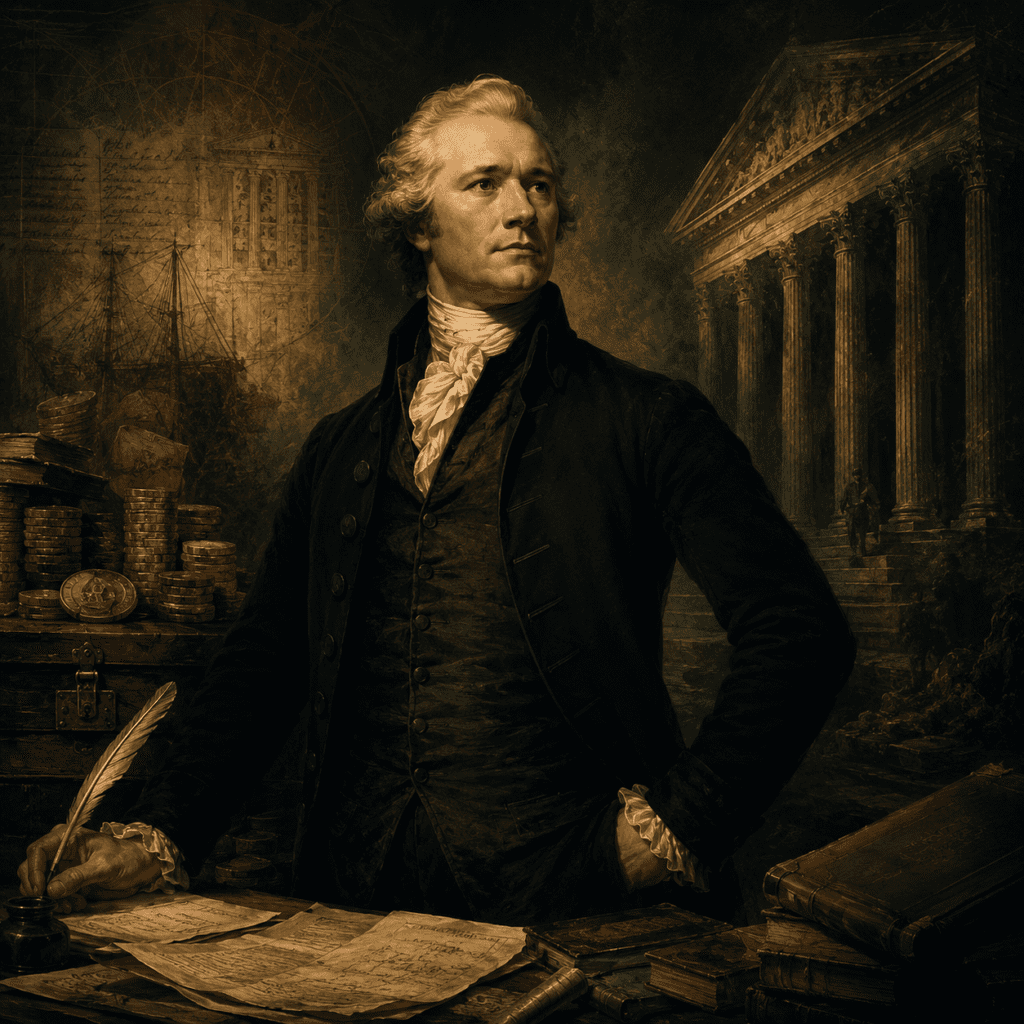
Alexander Hamilton.
Hamilton ne samjha ki agar America ko real power banana hai, toh usse chahiye:
- Stable national currency
- National banking system
- Government bond market
- Financial credibility
Usne war debts systematically organize kiye. Federal credit system build kiya. National banking institutions ko support kiya.
Yeh sirf boring financial reforms nahi the.
Yahi the America ke future empire ki foundation.
Hamilton ka simple mantra tha:
“Strong money creates a strong nation.”
Aur history ne eventually usse sahi prove kiya.
Chapter 4 — Gold Standard: Paison Ko Anchor Mila
1800s mein duniya gradually Gold Standard ki taraf move kar rahi thi.
Simple language mein:
Government promise karti thi ki har currency note fixed amount of gold se linked hogi. Agar log chahein toh theoretically notes ko gold mein convert kar sakte the.
Gold Standard ke advantages:
- Inflation relatively controlled rehti thi
- International trade easier hota tha
- Currencies stable lagti thi
America ne bhi gold-backed monetary system adopt kiya.
Isse dollar ki credibility improve hone lagi.
Lekin us waqt global financial king abhi bhi tha:
British Pound.
London duniya ka financial center tha. Bank of England sabse powerful institution.
America rising power tha — ruler nahi.
Abhi nahi.
Chapter 5 — Industrial America: The Rise of a Giant
1800s ke end tak America rapidly industrialize hone laga.
Railways expand hui. Steel industry boom hui. John D. Rockefeller ki oil companies grow hui. Factories aur banks multiply hone lage.
America ki productive power explode kar rahi thi.
Lekin ek hidden weakness abhi bhi thi — financial system fragile tha.
Bank panics frequently hote they. Between 1863 aur 1913, America mein kam se kam 8 major banking panics aaye. (Source: Federal Reserve History — Banking Panics of the Gilded Age)
Agar log panic mein banks se paise nikalne lagte, toh:
- Banks collapse ho jaate
- Loans ruk jaate
- Economy freeze ho jaati
1907 mein ek massive banking panic aaya — “The Knickerbocker Crisis.”
New York ki Knickerbocker Trust Company collapse ho gayi. Panic spread hone laga. System almost edge par pahunch gaya.
Us waqt koi central bank nahi thi jo intervene kar sake. Private banker J.P. Morgan ne personally apna paisa lagakar system ko bachaya. (Source: History.com — Federal Reserve Origins)
Lekin yeh sochne wali baat thi:
Ek nation ki financial stability ek private individual ki goodwill par dependent thi?
Yeh clearly sustainable nahi tha.
Chapter 6 — Federal Reserve Ka Janam: December 23, 1913
1907 ke crisis ne ek cheez clear kar di — America ko ek central banking system chahiye tha.
1910 mein ek secret meeting hui — Jekyll Island, Georgia mein. Top bankers aur government officials ne milkar blueprint banaya.
Aur December 23, 1913 ko Federal Reserve Act sign hua. (Source: Federal Reserve Wikipedia)
Fed ka kaam:
- Money supply manage karna
- Banks ko emergency liquidity dena
- Financial crises ko control karna
- Overall system ko stabilize karna
12 regional reserve banks create kiye gaye — ek compromise jo single all-powerful central bank se bachata tha.
Aaj bhi jab duniya interest rates, inflation ya recession ki baat karti hai — discussion almost always Federal Reserve par aa jaati hai.
1913 ke baad dollar system zyada organized aur powerful hone laga.
Lekin abhi bhi dollar duniya ka king nahi bana tha.
Uske liye duniya ko ek massive shock chahiye tha.
Aur woh shock tha — World Wars.
Chapter 7 — Europe Jalaa, America Bada
August 1914. World War I start.
Europe ki economies war mein burn hone lagin.
Britain, France, Germany — sab heavily debt mein chale gaye. Rebuilding pressure face karne lage. Financial strength lose karne lage.
Meanwhile America:
- Industrial goods supply kar raha tha
- Weapons export kar raha tha
- War loans de raha tha — Europe ko
Gold reserves gradually America ki taraf flow hone lage.
Global financial gravity shift hona start ho gayi:
London se New York ki taraf.
Pehli baar duniya ko laga — future financial power shayad America ho sakta hai.
Chapter 8 — Great Depression: Jab Sab Kuch Toot Gaya
October 1929. US stock market collapse.
Great Depression start hui — history ki sabse devastating economic crisis.
Banks fail hone lage. Businesses band hone lage. Unemployment 25% tak pahunch gayi.
Log panic mein banks se gold aur cash nikalne lage.
Problem yeh thi: agar sab log ek saath gold demand karein — toh poora financial system collapse ho sakta tha.
1933 mein President Franklin D. Roosevelt ne major action liya.
Roosevelt’s New Deal and Dollar:
- Executive Order 6102 — March 1933 — FDR ne ek shocking order sign kiya. American citizens ko apna gold government ko surrender karna pada. Ghar mein gold rakhna illegal ho gaya. Violation par — 10 saal jail ya $10,000 fine.
- Gold Reserve Act 1934 — Dollar ki official value change ki gayi. 1 ounce gold = $20.67 se badhakar $35 kar diya gaya. Matlab dollar devalue hua — lekin government ka gold reserves ka value badh gaya.
- FDIC created 1933 — Federal Deposit Insurance Corporation. Agar bank duba toh government aapka paisa wapas karegi. Logon ka banking system par trust wapas aaya.
- Glass-Steagall Act 1933 — Investment banking aur commercial banking alag kar diye gaye. Speculation rokne ki koshish.
- Result — 1934 se 1944 tak America ka gold reserves massively grow kiya. Yahi wajah thi ki 1944 Bretton Woods mein America ke paas world ka 70% gold tha.
Yahan ek important reality saamne aayi:
Governments money systems ko protect karne ke liye rules change kar sakti hain — aur karti hain.
“New Deal ne dollar ko survive karaya — aur Bretton Woods ne use king banaya.”
America aur centralized financial power ban gaya.
Chapter 9 — Bretton Woods: Dollar Ka Asli Global Crown
July 1944. World War II almost khatam hone wali thi.
Europe devastated tha. Britain financially weak ho chuka tha.
Aur America? America duniya ki strongest major economy ban chuka tha.
Aur yahan hota hai woh turning point moment — jis par poori dollar ki global story tiki hai.
44 countries ek conference mein mili:
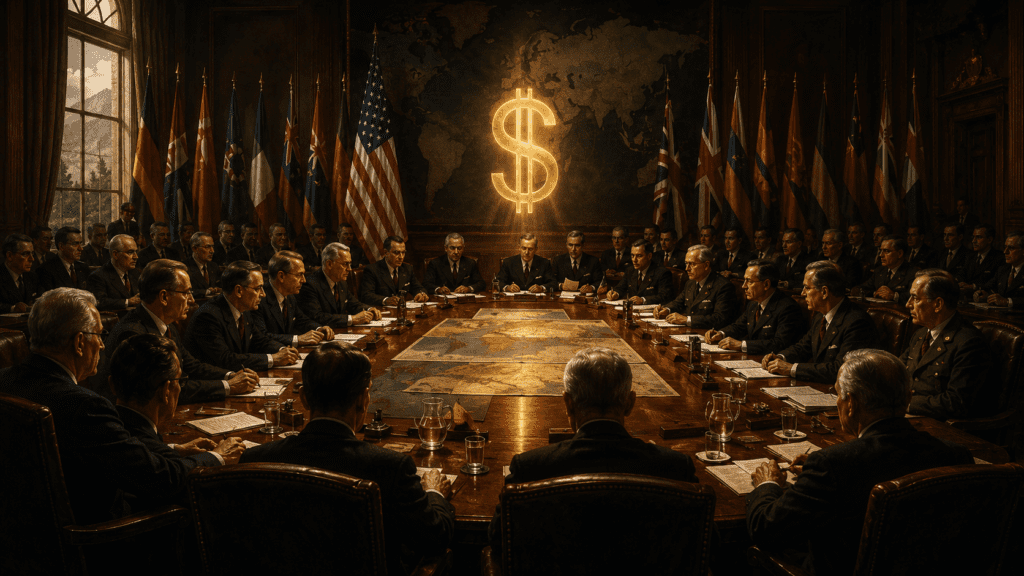
Mount Washington Hotel, Bretton Woods, New Hampshire. July 1-22, 1944. 730 delegates. 44 nations.
Yahan modern global financial system design hua. (Source: Federal Reserve History — Bretton Woods)
Key decisions:
- US Dollar ko gold se peg kiya gaya — $35 per ounce of gold
- Baaki sab currencies dollar se linked hongi — 1% deviation allowed
- IMF (International Monetary Fund) create kiya gaya
- World Bank create kiya gaya
Reason?
America ke paas:
- Strongest economy thi
- World ka 70% gold Fort Knox mein tha (Source: Bretton Woods Committee)
- Relatively stable financial system tha
- War mein sabse kam damage hua tha

Britain ne kya socha?
British economist John Maynard Keynes ne propose kiya tha ek neutral international currency — “Bancor” — jo kisi bhi ek country ka nahi hota.
Lekin America itna powerful tha ki uski currency hi win kar gayi.
New York Times ne 23 July 1944 ko likha:
“The American dollar thus obtains international recognition, on paper as in fact, as the world currency.”
Ending — Dollar Kaise Bana King?
Dollar kisi magic printing machine se powerful nahi bana.
Woh bana:
- Wars se — jisne Europe ko weak aur America ko strong kiya
- Gold policies se — jisne monetary credibility di
- Debt systems se — jisne financial architecture build kiya
- Public trust se — jisne Continental Currency failure se seekha
- Institutions se — Federal Reserve, IMF, World Bank
- Geopolitical power se — jo 1944 mein formally confirm hua
1944 ke baad duniya ek naye era mein enter kar gayi.
Ek aisa era jahan America ki currency gradually duniya ki currency banne lagi.
Lekin yeh sirf beginning thi.
Agle part mein: Dollar ka gold se alag hona — Nixon Shock 1971 — aur petrodollar system ka janam. Duniya ka sabse controversial financial decision.
Dollar Ki Kahani — Part 2 aap link pe click karke padh saktey hai.
FAQ Section
Q1: Bretton Woods agreement kya tha?
1944 mein 44 countries ne New Hampshire mein ek conference ki jahan post-war global financial system design hua. Main decision: US dollar gold se linked hoga ($35 per ounce), aur baaki currencies dollar se linked hongi. Yahi se dollar officially duniya ka financial anchor bana.
Q2: America ne Bretton Woods kyun chhod diya?
1971 mein Nixon Shock ke through. Vietnam War ki massive spending, falling gold reserves, aur European countries ki gold demands ne system par itna pressure daala ki America ne dollar-gold convertibility suspend kar di. “Temporary” tha — permanent ho gaya.
Q3: Bretton Woods ke 5 key elements kya the?
1. Dollar gold se $35/oz par linked tha.
2. Baaki currencies dollar se pegged thi.
3. IMF create hua emergency support ke liye.
4. World Bank create hua reconstruction ke liye.
5. Fixed exchange rate system — currencies ek range mein rehti thi.
Q4: Continental Currency kyun fail hui?
Kyunki uske peeche koi strong backing nahi thi — na gold, na stable government, na public trust. Jab government ne bahut zyada print kiya, inflation explode hui aur currency worthless ho gayi. Yahi lesson aaj bhi valid hai.
Sources:
- Wikipedia — Spanish Dollar
- Federal Reserve History — federalreservehistory.org
- Bretton Woods Committee — brettonwoods.org

“One of the most understandable explanations of dollar history I’ve seen. Nice work.
Thanks Nishith! Part 2 coming soon — stay tuned! 🌱
Nicely explained. Really good read
Thanks Abhay! Stay tuned for part-2
Nice indepth explanation , great for understanding the global history of dollar. Also helpful for competitive exam aspirants
Thanks Noorul! Stay tuned for part-2
Good coverage on dollar and its importance. Looking forward for part 2.
Thanks Shantanu!